Broken Access Control – Unprotected Admin Panel via Unpredictable URL Leading to Privilege Escalation | Unprotected Admin Panel
Posted Updated 
Hidden Admin Panel Access via Source Code
By
1 min read
Broken Access Control – Unprotected Admin Panel via Unpredictable URL Leading to Privilege Escalation | Unprotected Admin Panel
🧠 Overview
This lab demonstrates why security through obscurity is ineffective.
Even when administrative endpoints use unpredictable URLs, they can still be exposed through client-side code such as HTML or JavaScript.
🎯 Objective
- Identify the hidden admin panel
- Delete the user
carlos
🔍 Reconnaissance
Step 1: Inspect Page Source
The HTML source code of the application was reviewed.
🔎 Observation
A hidden administrative endpoint was discovered:
1
/admin-wfqh8r
📸 Evidence
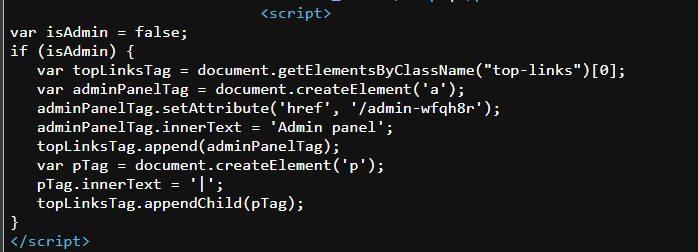
This indicates that sensitive functionality is exposed in client-side code.
💥 Exploitation
Step 2: Access Admin Panel
Navigate directly to:
1
/admin-wfqh8r
📸 Evidence
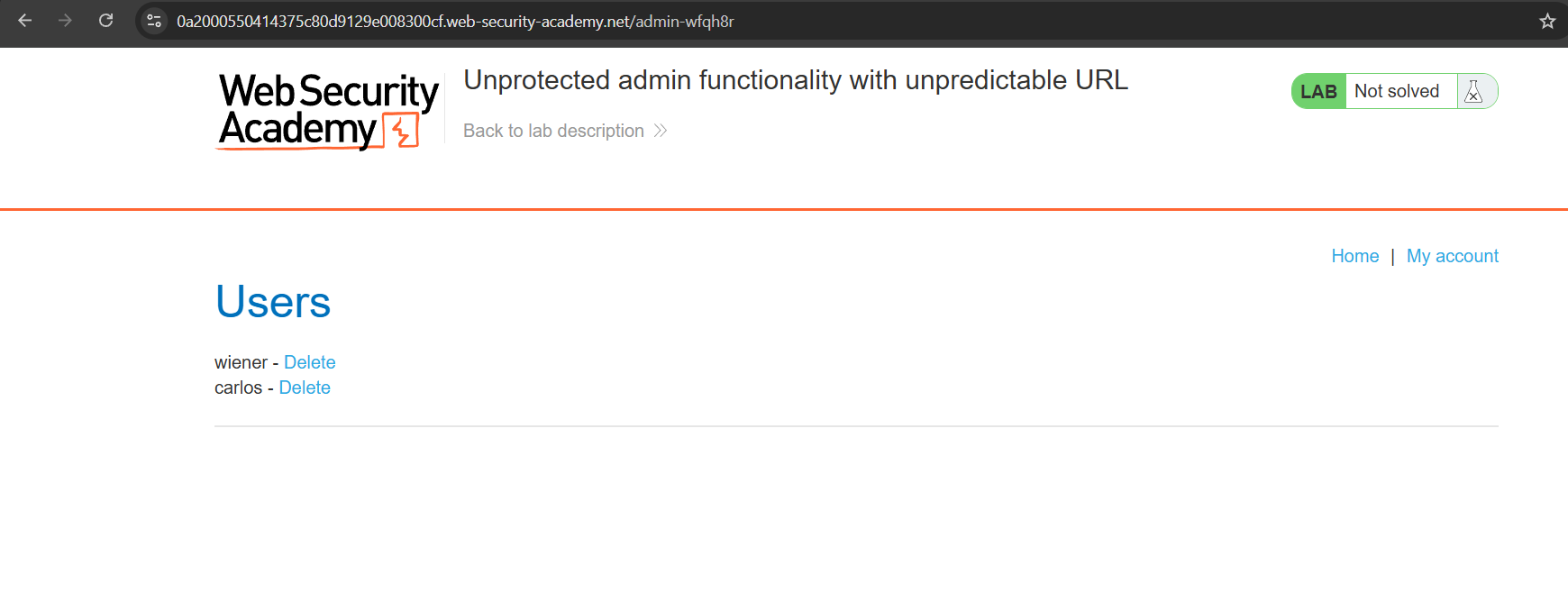
The admin panel is accessible without authentication.
Step 3: Perform Administrative Action
- Accessed admin interface
- Navigated to user management
- Deleted user
carlos
📸 Proof of Exploitation
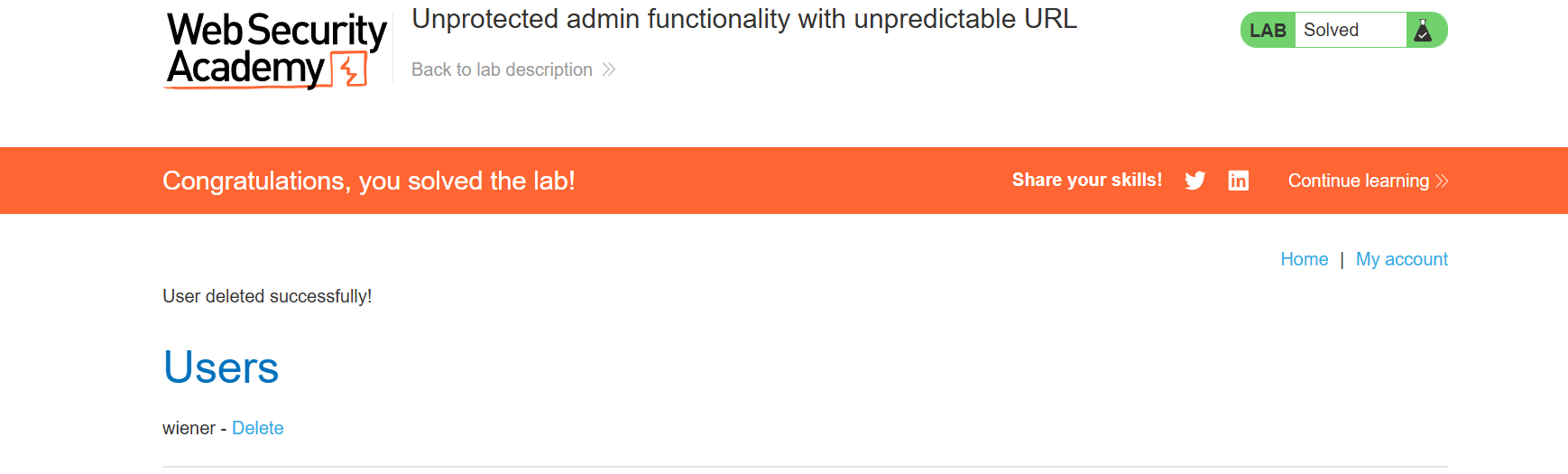
✅ Result
- Hidden admin panel successfully accessed
- No authentication or authorization enforced
- User
carlosdeleted - Lab marked as solved
🛡️ Impact
- Exposure of sensitive administrative endpoints
- Unauthorized access to privileged functionality
- Data manipulation or deletion
- Potential full system compromise
🛠️ Mitigation
- Do not rely on hidden or unpredictable URLs for security
- Enforce authentication and authorization on all endpoints
- Avoid exposing sensitive routes in client-side code
- Validate access on the server side
🌍 Real-World Insight
Attackers commonly discover hidden functionality by analyzing:
- HTML source code
- JavaScript files
- API responses
Relying on obscurity instead of proper access control is a frequent real-world mistake.
This post is licensed under CC BY 4.0 by the author.