Broken Access Control – Privilege Escalation via Client-Controlled Cookie | Privilege Escalation via Client-Controlled Cookie
🧠 Overview
This lab demonstrates a privilege escalation vulnerability where user roles are controlled via client-side input.
By modifying a cookie value, an attacker can escalate privileges and gain unauthorized administrative access.
🎯 Objective
- Access the admin panel
- Delete the user
carlos
🔍 Reconnaissance
Step 1: Login as Normal User
Logged in using the provided credentials:
1
wiener:peter
📸 Evidence
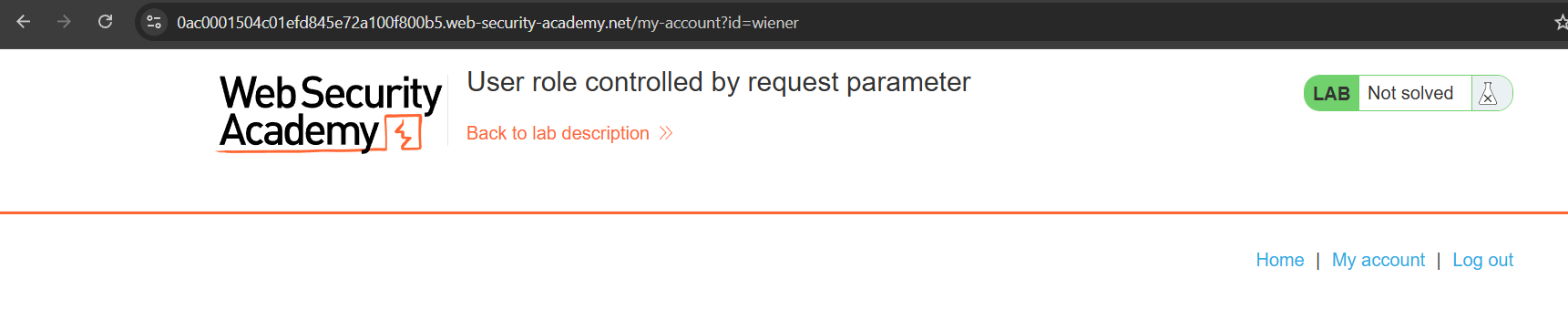
This confirms access as a regular user.
Step 2: Inspect Cookies
Browser cookies were analyzed using developer tools or a proxy.
🔎 Observation
A role-related cookie was identified:
1
admin=false
📸 Evidence
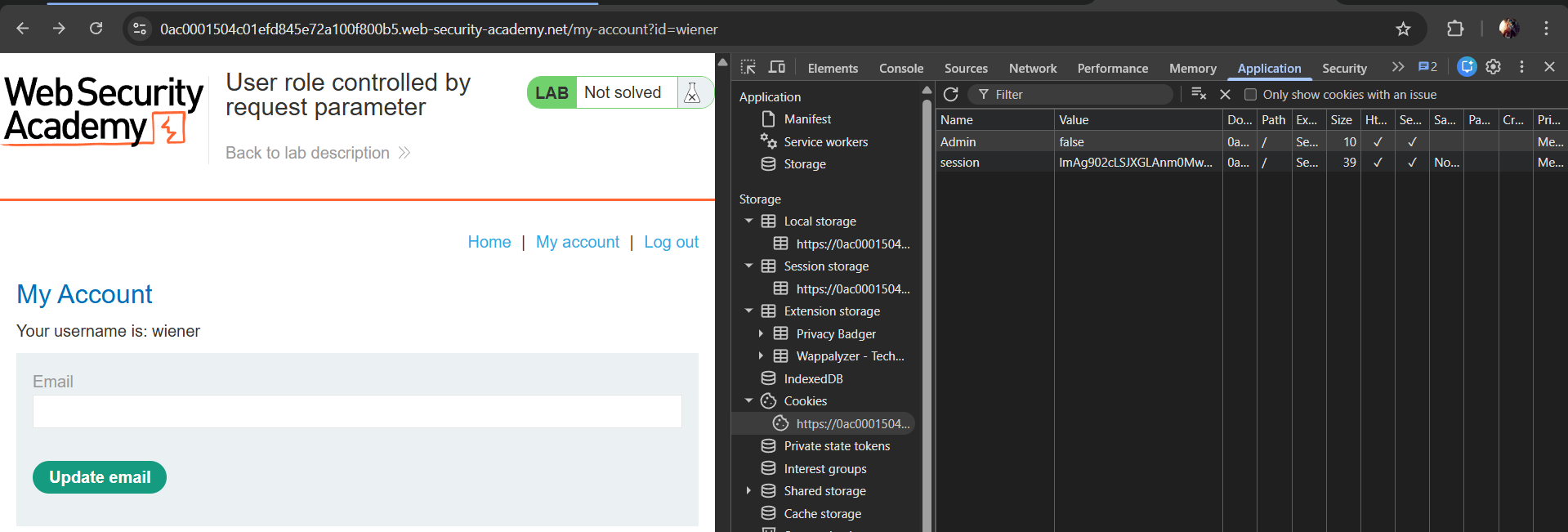
This indicates that role-based access control is handled on the client side.
💥 Exploitation
Step 3: Modify Cookie
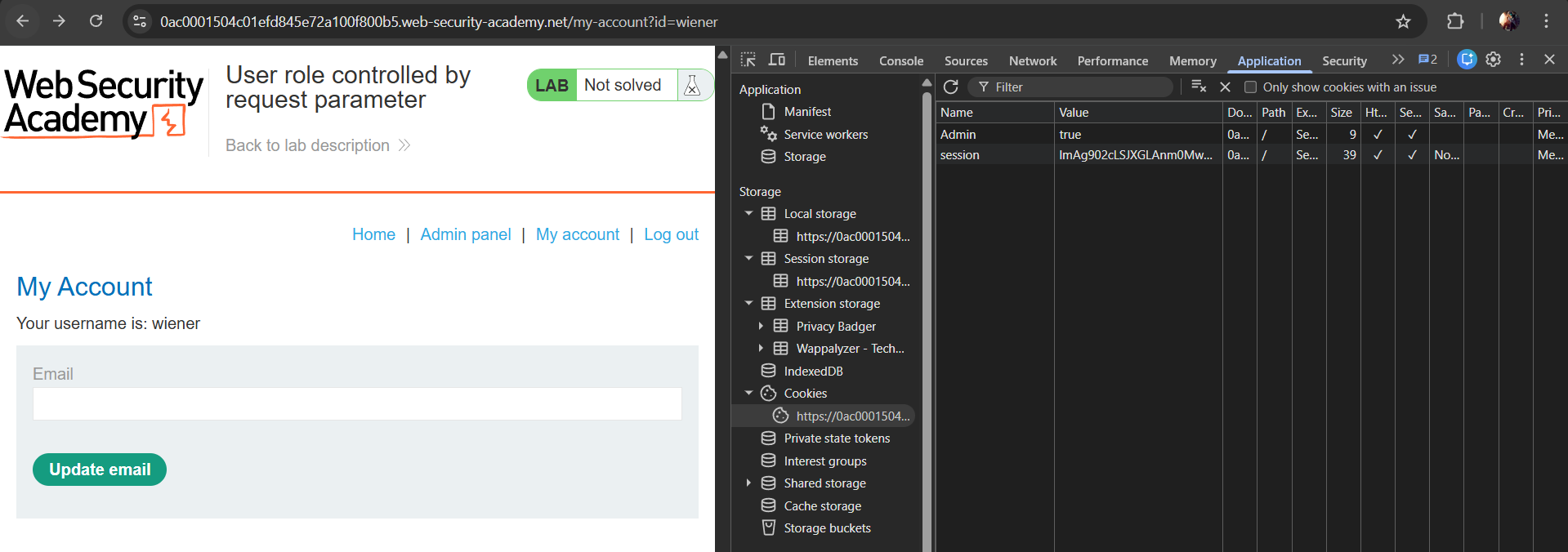
The cookie value was modified from:
1
admin=false
to:
1
admin=true
📸 Evidence
Step 4: Access Admin Panel
Navigated to:
1
/admin
📸 Evidence
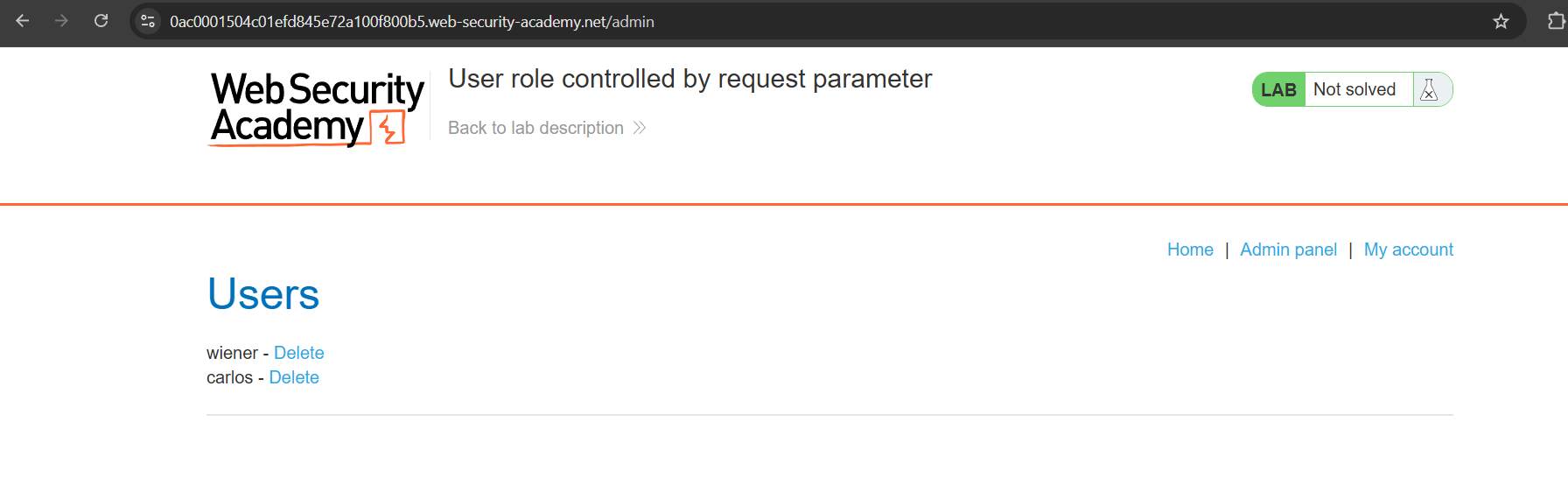
Administrative access was granted without proper authorization.
Step 5: Perform Administrative Action
- Accessed admin interface
- Navigated to user management
- Deleted user
carlos
Proof of Exploitation
✅ Result
- Privilege escalation achieved via cookie manipulation
- Unauthorized administrative access obtained
- User
carlossuccessfully deleted
🛡️ Impact
- Privilege escalation through client-side manipulation
- Unauthorized access to administrative functionality
- Potential data modification or system compromise
🛠️ Mitigation
- Never trust client-side input for authorization decisions
- Enforce role validation on the server side
- Implement secure session management
- Validate all privilege-related data server-side
🌍 Real-World Insight
This vulnerability is common in poorly designed applications where role-based access control is handled on the client side.
Attackers often manipulate:
- Cookies
- JWTs
- Request parameters
to escalate privileges and gain unauthorized access.