Local File Inclusion – Log Poisoning to Remote Code Execution | Venomous
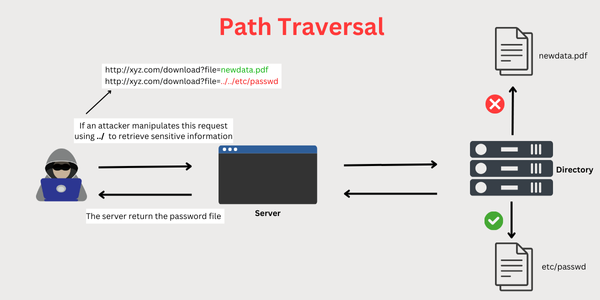
Overview
This lab demonstrates exploitation of a Local File Inclusion (LFI) vulnerability combined with log poisoning to achieve remote code execution on a web server.
The attack leverages improper file handling in a web application to read sensitive files and inject malicious payloads into server logs, which are later executed.
Objective
- Identify directory traversal and LFI vulnerability
- Access sensitive files on the server
- Perform log poisoning
- Achieve remote code execution
- Obtain a reverse shell
Reconnaissance
Initial service enumeration:
1
nmap -sV <target_ip>
Result:
1
2
PORT   STATE SERVICE VERSION
80/tcp open  http    nginx 1.18.0
Directory enumeration:
1
gobuster dir -u <url> -w <wordlist_path>
Discovered directories included:
/invoices/css,/js,/fonts
Exploitation
Identifying LFI
The application allowed downloading invoices via:
1
/show-invoice.php?invoice=invoice-XXXX.html
The invoice parameter was tested for path traversal:
1
/show-invoice.php?invoice=../../../../../../../../etc/passwd
Successful response confirmed LFI, exposing system files.
Log Poisoning
To achieve code execution, server logs were targeted.
A malicious payload was injected into the web server logs using a crafted HTTP request:
1
nc <target_ip> 80
Payload:
1
2
GET /[php-system-exec-payload] HTTP/1.1
Host: <target_ip>
The injected request line embeds a server-side scripting block inside the URL path. When the web server logs this request, the scripting block gets written into the access log. The block uses a built-in execution function that runs the value of a URL parameter as an OS-level shell command.
This payload was written into the Nginx access log.
Remote Code Execution via LFI
The poisoned log file was then accessed through the LFI vulnerability:
1
/show-invoice.php?invoice=../../../../../../../../var/log/nginx/access.log&cmd=id
This executed system commands on the server.
Reverse Shell
A listener was started on the attacker machine:
1
nc -lvp 1337
Payload:
1
2
3
GET /[php-passthru-reverse-shell-payload] HTTP/1.1
Host: <target_ip>
Connection: close
Similar to the previous step, this injects a server-side scripting block into the log. Instead of running a single command, it uses a stream execution function to spawn an interactive shell process and tunnel it back to the attacker’s machine over the network on a specified port.
After accessing the log file again via LFI, a connection was established back to the attacker machine.
Proof of Exploitation
- Successful file read via LFI
- Execution of system commands
- Reverse shell obtained from target
Impact
This vulnerability chain allows:
- Arbitrary file read access
- Remote code execution
- Full system compromise
- Unauthorized access to sensitive data
Such vulnerabilities can lead to complete takeover of the server.
Mitigation
- Validate and sanitize user-supplied file paths
- Prevent directory traversal using strict input validation
- Restrict access to sensitive system files
- Disable execution of user-controlled input
- Secure and monitor server log files
- Implement least privilege for web services
Real-World Insight
LFI vulnerabilities are often underestimated but can become critical when combined with log poisoning or file upload flaws. Many real-world breaches occur due to chaining such vulnerabilities.
This type of issue is commonly associated with improper input handling and aligns with risks highlighted by OWASP.
Conclusion
This lab demonstrates how a simple file inclusion flaw can escalate into full remote code execution when combined with log poisoning. Proper input validation and secure handling of server-side resources are essential to prevent such attacks.